Do I have a punctured tyre?
An easy way to tell if you need a tyre puncture repair is to do a quick visual inspection of your tyre. Check for things like nails, screws, or small road debris in your tyre. If for whatever reason you cannot identify the cause of your punctured tyre, watch for the following indicators:
You experience sluggish or heavy steering
You feel a strong drag towards one direction
Your tyre makes a squealing noise when you turn the corner
Your sitting position feels unleveled
Tyre pressure warning shows up on your tyre pressure monitoring system (TPMS)
Do I need a puncture repair?
Once you know for certain that you have a punctured tyre, remain calm and have a professional check on your specific case.
For a large puncture, you must identify which areas of the tyre need tyre puncture repair.
Tyre puncture repair in the tread area
Severe punctures in the tread areas might call for tyre replacement after suffering from additional damages while running with a flat tyre.Tyre puncture repair in the shoulder area
Damage in the shoulder areas is not repairable. Tyres should be completely replaced.Tyre puncture repair in the sidewall area
Tyre puncture repair in the sidewalls can be tricky. The size of the puncture is 3mm or less in diameter, your tyre is repairable. Beyond this index, tyre repair is strongly discouraged to avoid safety risks.
*Tyre Speed Rating chart shows the speed at which each specific tyre is designed for.
How does tyre puncture repair work?
Mottling of the tyre: tyre is marked on the inside
Chattering of the inner rubber: pieces of rubber heat up and break off.
Dislocation of the tyre
If the inner liner has been damaged, tyre repair is not possible.
Tyre puncture repair methods
There is no one-size-fits-all solution when it comes to tyre puncture repair. Here are three methods that you should know of.
Tyre puncture repair with a mushroom plug or PRP (puncture repair plug)
The mushroom plug method requires an examination of the inside of your tyre for damages before a mushroom plug is inserted and glued for a complete seal.Tyre puncture repair with a wick
To repair a tyre puncture with a wick is to insert seals from the outside. This puncture repair involves no damage assessment or inspection of the inside of your tyre after running flat. Chances are that you might run into another tyre issue down the line.Tyre puncture repair with a patch
While patches are a better fix for large punctures than plugs, damaged parts of the tyre are often left unsealed. Water exposure and tyre explosion can become common problems.
Do I need a repair kit for tyre puncture repair?
A tyre repair kit generally consists of a puncture repair spray and a compact air compressor. Repair kits only offer a temporary fix to punctures that are smaller than 3mm. While this would be enough to get you to your nearest help, a proper tyre repair is highly recommended.
We highly advise against using a tyre repair kit to drive long distances. In the event of a tyre puncture, it is advisable to contact a mechanic to take your vehicle in for a professional examination.
Can I repair a punctured tyre myself?
Repairing is not the right option
Sometimes, your tyre needs replacement instead of tyre puncture repair.Professionals know what’s best
Choosing between a plug and a patch is not as easy as it looks. Leave the technical side of things to the experts.You don’t have all the tools
You would need a lot more tools than a patch to fix your punctured tyre and get your car up and running.Unprofessional repair spells trouble
The stakes are high. You could get yourself and others into an accident with improper tyre puncture repair.


Find tyre dealers near you in seconds
Search among our dealers to find where your tire is available
Professional tyre puncture repair
Effective tyre puncture repair is a technical operation. This is how professionals carry out tyre puncture repairs.
After locating the exact location of the puncture, the foreign body is removed.
The technician then cleans the inside of the tyre and applies tyre sealant to the affected areas.
A "mushroom" is inserted into the hole from the inside out.
To complete the process, tyre professional removes the protruding part of the tyre, fills the opening with more tyre sealant, and reseals it.
Tyre puncture repair for different tyre types
Certain tyres are designed for different needs. For a tyre puncture repair to be effective, it must cater to the needs of each particular tyre.
Tyre puncture repair for quiet tyres:
Some acoustic tyres contain a special foam that reduces the noise of the tyre on the road. Industry-standard procedures are required.
Tyre puncture repair for self-seal tyres:
Self-seal tyres are characterized by a thick gel-like liquid that runs on the inner lining of your tyre that fills up a puncture. Do note that self-seal tyres are only available in the tread area. Replace the tyres when possible.
Tyre puncture repair for run flat tyres:
Run flat tyres make it possible to continue driving to the nearest garage after a puncture without damaging the inside of the tyres. At Michelin, runflat tyres are marked ZP (Zero Pressure) and EMT (Extended Mobility Tyres). These can only be repaired once.
Please note that run flat tyres are mounted on a specific rim adapted to a certain category of vehicle. They cannot be mounted on a normal rim.
Get in touch with our tyre repair experts
https://www.michelin.co.nz/assistance
0800-474-639
Related articles
-
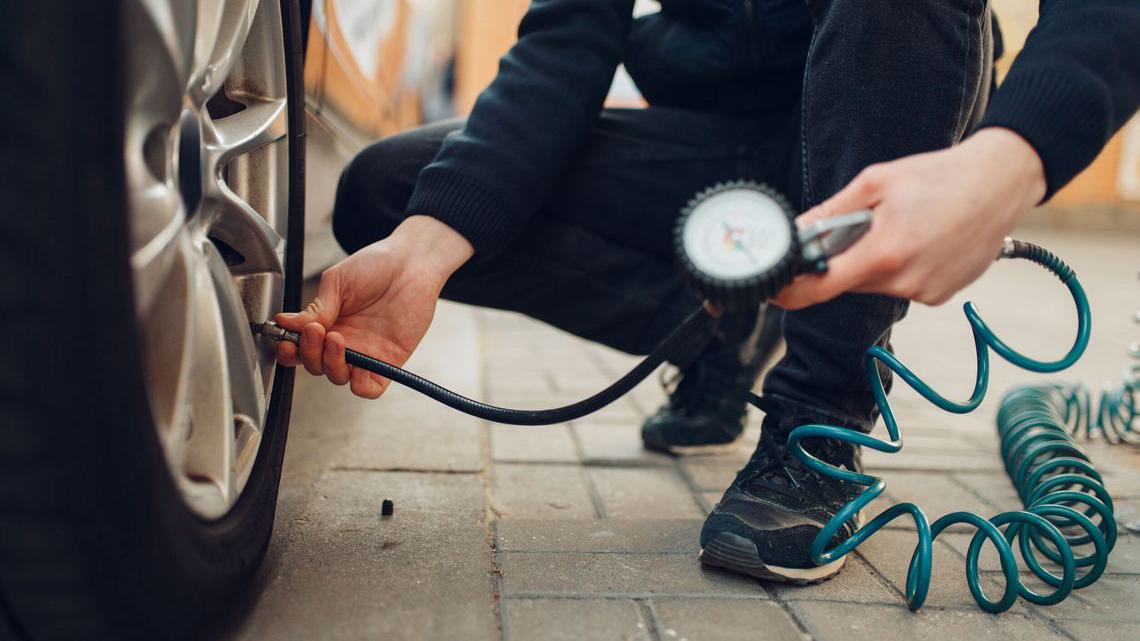
How to fill tyres with air?
Tyre pressure is an important factor to ensure your safety and that of your passengers. If your tyre pressure is incorrect, it can also impact your vehicle's operating costs through premature tyre wear and higher than normal fuel consumption. In this article, you will learn when you should check your tyre pressure and How to fill tyres with air in 3 simple steps. You will see that tyre pressure has to be done differently depending on whether your tyres are cold or warm and that the spare wheel should also be checked regularly, although not as often as the other tyres. We will also address the question of the portable tyre air compressor as an alternative to petrol stations and help you decide if you should fill tyres with nitrogen.Learn more -

What to do with a flat tyre?
If you have a flat tyre, it may be for a number of reasons. Often, inflation pressure loss is a consequence of a tyre puncture, or tyre sidewall damage, but it could also be a leaking valve, valve cap or even the wheel. So what should you do when your tyre goes flat? Let's get to the heart of the matter.Learn more -
What can cause excessive or irregular tyre wear?
It is normal for tyres in service to show progressive tyre wear over time. But sometimes, owing to specific conditions of use, tyres can exhibit abnormal or irregular tyre wear, which might reduce their service life. Eventually, some of the causes of irregular tyre wear could lead to a weakening of the tyre reinforcing structure, but before that, there could be other less obvious consequences, such as an increase in fuel consumption.
This article is about the causes of this excessive or irregular tyre wear, how to prevent them and how can you tell when it is time to change your tyres?Learn more