The basics of car wheel size
Let's start by examining how wheel size is measured and classified.
Car wheel dimensions
Wheel diameter is the most commonly referenced measurement and is expressed in inches (e.g., 16", 17", 18"). It represents the distance across the wheel from one edge to the other, measured at the wheel's widest point where the tyre bead sits.
Wheel width, which is measured in inches, indicates how wide the wheel is from inside edge to inside edge. A wider wheel can accommodate a wider tyre.
Offset determines how far the wheel's mounting surface sits relative to the wheel's centerline. Positive offset means the mounting surface is toward the front (outside) of the wheel, while negative offset places it toward the back (inside).
Reading tyre size markings
Tyre sizes work in conjunction with wheel sizes and are displayed as a series of numbers and letters, such as 225/40R18. To help you in understanding tyre markings, let’s break down the example.
225 is the tyre width in millimeters.
40 is the aspect ratio (sidewall height as a percentage of width).
R stands for “radial construction”.
18 is the wheel diameter in inches that the tyre fits.
Understanding these basics helps you make informed decisions about wheel and tyre combinations that suit your driving needs and communicate clearly with tyre shop staff.

Seven ways that larger wheels affect driving performance
Now that you understand wheel measurements and tyre sizing, let’s explore the impact of wheel dimensions on your car’s performance.
1. Handling & steering response
The relationship between a wheel's diameter and a tyre's sidewall height changes how your car connects with the tarmac. Typically, larger wheels are paired with lower profile tyres with shorter sidewalls. This reduces the flex in the side of tyres during cornering, resulting in a more direct, responsive feel through the steering wheel and more stability on curves.
2. Braking performance
While brakes are obviously crucial, tyres are where the stopping force meets the road. Larger wheels typically accommodate larger wider tyres, offering a broader contact patch. This increased surface area can translate to more effective friction and a shorter stopping distance. The additional space within larger wheel designs also allows for larger brake calipers, potentially boosting overall braking power and heat dissipation.
3. Acceleration & energy in momentum
A larger wheel diameter effectively lengthens a vehicle’s gear ratio. This means the engine has to work slightly harder to get the larger tyre mass moving from a standstill, which can lead to marginally slower initial acceleration. Conversely, reducing the overall diameter can provide a quicker start. It's a subtle but measurable effect, particularly noticeable in stop-and-go driving conditions.
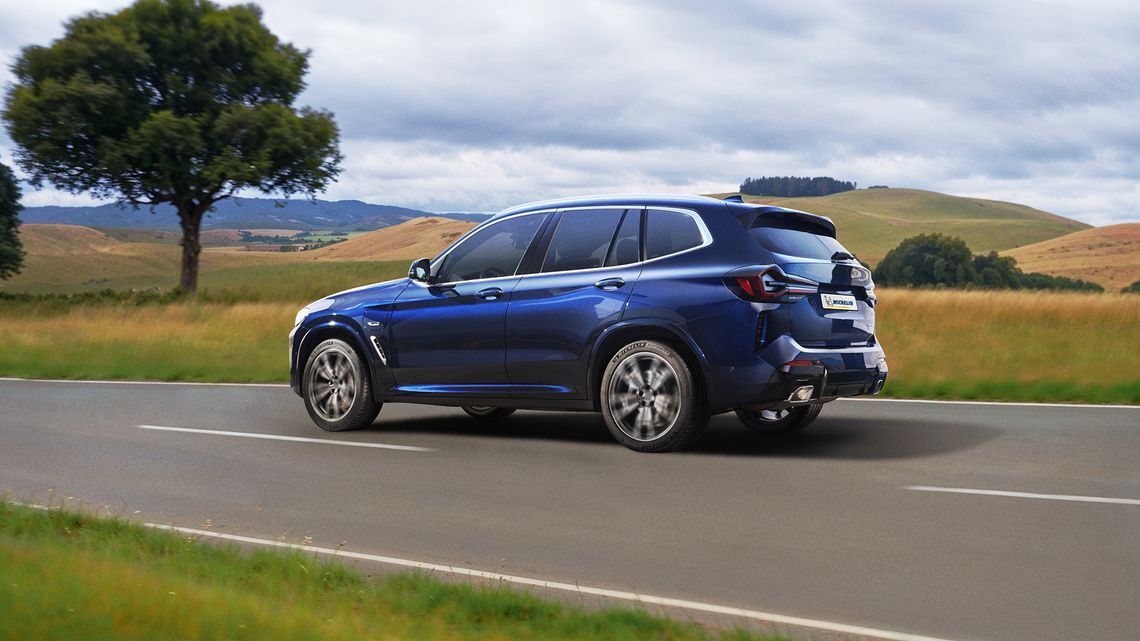
4. Comfort and control
Tyre sidewalls absorb the impact of road imperfections before these vibrations reach the vehicle's chassis. Tyres with taller sidewalls (often found on smaller diameter wheels) excel at this, providing a more comfortable ride that smooths out bumps and potholes. In contrast, the stiffer, shorter sidewalls associated with larger diameter wheels offer less cushioning.
5. Increased potential of tyre damage
The shorter sidewalls on large-diameter wheels mean less material to absorb the impact of road hazards. When encountering obstacles like potholes, kerbs, or debris, more of this force is transmitted to the tyre's internal structure and the wheel itself. This increases the risk of cuts, bulges, or even blowouts, to the tyre.
6. Fuel consumption
Heavier, larger wheels add to a vehicle's unsprung weight (the mass not supported by the suspension). This added weight requires more energy to accelerate and brake. The resulting rotational inertia can lead to a slight reduction in fuel efficiency.
7. Load bearing capabilities
Larger wheels, typically designed to accommodate wider tyres, often come with an increased load capacity. The contact patch that wider tyres provide distributes a vehicle's weight over a greater area, enabling big tyres to withstand heavier loads than their smaller counterparts.


Dealer Locator
Search among our dealers to find where your tyre is available
Deciding on bigger wheels vs. small wheels
While larger wheels are appealing, stay within your vehicle manufacturer's recommended specifications to avoid issues with speedometer accuracy, clearance, suspension geometry, and safety. Remember that upgrades involve costs for wheels, tyres, and potential speedometer recalibration or brake modifications. Consult trusted tyre and wheel professionals for precise fitment and to understand performance and safety implications.
Enhance your drive with MICHELIN Tyres
Whether you're sticking with your current wheel size or considering sizing up, the right tyres are fundamental to your car's performance and safety. MICHELIN tyres are engineered for superior performance, offering the grip, stability, and efficiency that complement your braking system and overall driving dynamics. Explore our extensive selection to find the perfect MICHELIN tyres for your needs. Find your nearest dealer here.
Related articles
-

Summer tyres VS all season tyres: how to choose?
For a long time, choosing tyres was a simple process - summer tyres for the summer and winter tyres for the winter.
Today, however, all season tyres offer a whole new range of possibilities, and it is not always easy to know what’s the best option for you. This is where Michelin comes in. Whether you’re thinking of going for summer or all season tyres, we’re here to give you all the information you need to help make the right decision.Learn more -

Can you mix different tyres?
Can you put different tyres on the front and rear? Can you mix different tyre brands? Can you have different tread depths on the same axle? It's not easy to find your way around, but MICHELIN helps you understand what is possible and what is not.Learn more -

Should my new tyres be OE tyres or aftermarket tyres?
When it’s time to get new tyres, you might wonder if you should look for original equipment tyres or aftermarket tyres. This article will explain what OE tyres (or marked tyres) are, how to read OE tyre markings, and the benefits of picking tyres made for your vehicle.Learn more